Five winemakers, plus valued teams in the vineyard, at the winery, and among our partners and the communities we rely on: CHANDON is a network of skilled individuals who share knowledge, insights, and practical help. Our skill, our flair for adventure and our curiosity unite us. Each of us knows we cannot do this alone. We travel, we harvest, we exchange; thus, insights gleaned in a harvest in Argentina might find their way into a bottle in China. Our collective intelligence is our strength.


PHILIPPE MÉVEL
Head Winemaker, CHANDON Brazil
MEET OUR WINEMAKERS
Each has a unique vision, but they share a thirst to push boundaries in the quest to craft exceptional sparkling wine

PAULINE LHOTE
"I knew by 14 that I wanted to make sparkling wines. I grew up in Champagne, so it was all around me. After working in Champagne I had an opportunity to work at CHANDON and to pick my location; I chose California. It was supposed to be a three-month internship, but I'm still here! I spent 10 years as assistant winemaker. It’s such a complex process, and I had to spend a lot of time getting to know our varied terroirs.
I’m the fourth winemaker at CHANDON, and the second woman, after Dawnine Dyer. I also have a lot of women in my team, which is pretty rare. Most of our consumers are women, so perhaps it helps me relate. My CHANDON wines are very much about expressing the Californian terroirs and the grapes. It’s sunshine, it’s easygoing, it’s fruit expression. Approachable. I wanted to make wines to drink on a Tuesday or Wednesday night. That’s a common thread for all the CHANDON houses: that feeling of friendliness rather than high occasion. I work a lot on making sure our wines are soft, round, easy to drink.
We’re a real community at CHANDON. There are always projects at our other wineries that make you challenge and question yourself, make you want to try it at home. It works both ways. I started using oxygen-management technology to deal with phenolics in the juice, and then the others took it up. But there are things I’ve learnt at CHANDON Australia, for example, and brought back home with me.
In general I’m a big fan of technology. I want data to help me make decisions. But no two vintages look the same, so you do need to trust your instincts and experience. Tasting and blending are pure art. The science is like a safety net, in a way.
For now, we’re working mainly with the classic champagne varieties, but who knows? We might try others – we're agile and responsive. I’m not here to make a champagne-a-like. Not at all. I’m making a Californian wine – the best Californian sparkling wine possible."


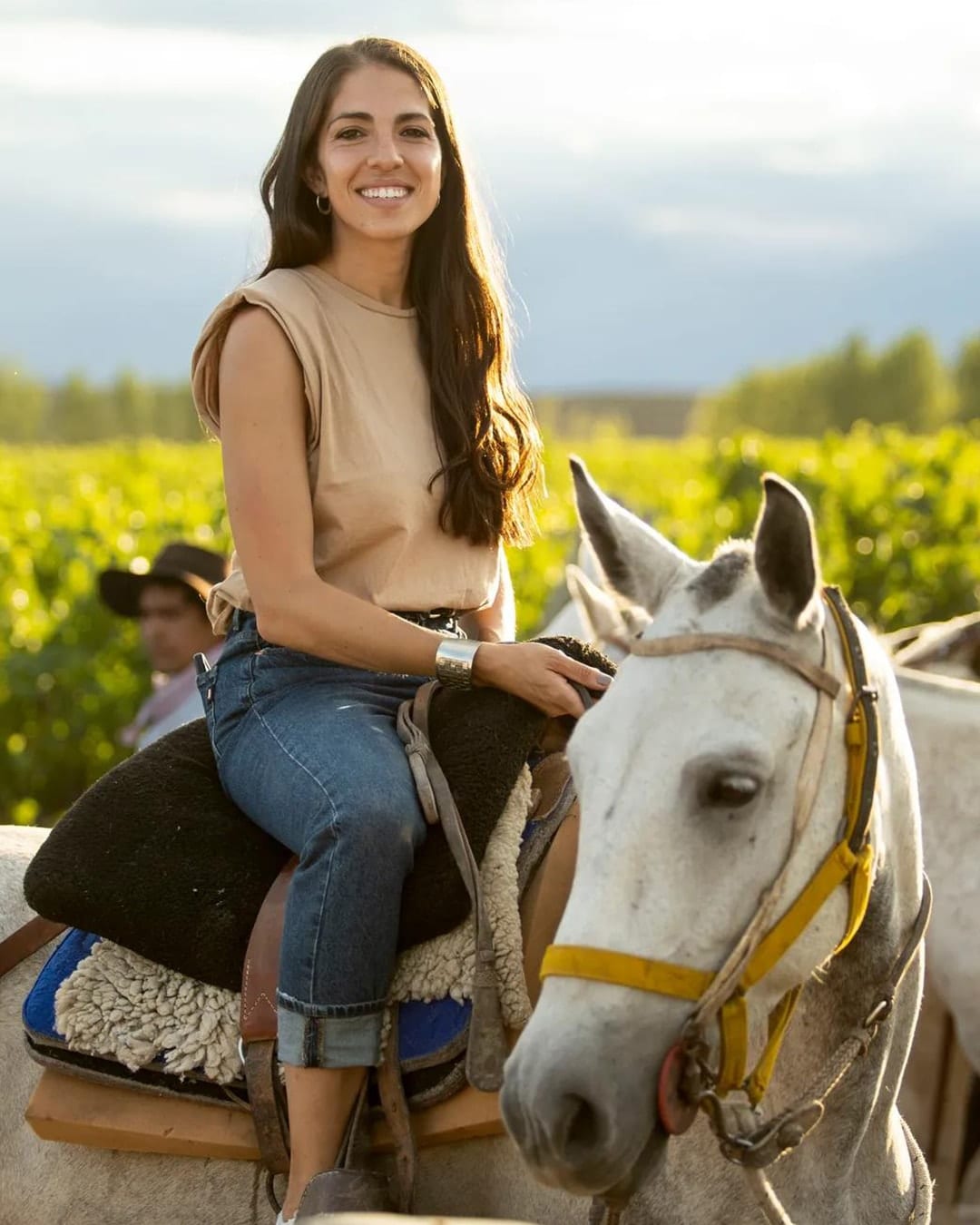
ANA PAULA BARTOLUCCI
"I come from a wine family. When I was deciding what to study, my father sent me to a friend’s winery in Mendoza for a month. I loved it. Before I graduated I went abroad to gain some more experience. I went to South Africa first. It felt a very long way from Argentina; but I knew this was my big opportunity to learn about terroir, soil, the influence of the sea. And then I went to Spain, to a small family winery. I loved the owner’s philosophy. He worked with very old vines. The yield was very low, so the winemaking had to be super-precise. He knew he had a treasure there.
Mendoza pulled me back. I love the land, the wild nature, and, of course, my family. In 2017, the opportunity to work at CHANDON came up. We were about 400 applicants at the beginning, and the interview process lasted about six months. Finally the chef de cave, Onofre Arcos, asked me to make my own blend.
I was very nervous, but I thought OK, I have to be myself. That’s the difference. I made a blend like me: energetic, vivacious… And it worked. Six years later, in 2023, I was appointed chief winemaker.
In wine, you never stop learning. You’re working with nature, and nature is different every year. Consumers evolve, too, and we always listen to them. It’s a dynamic, responsive process; you develop a sensibility, an intuition.
The CHANDON house style is a combination of innovation and tradition. We have products for, say, my father, with less sugar, more complexity; for my cousin, who’s young and likes style, flavorful, and versatile creations; we have CHANDON Spritz; and there’s lots in between. In the tasting room, we're thinking about more aromas, more volume, and a very good, precise expression for each product.
We work in a regenerative way. This is a desert climate, so we need to irrigate, but we have a team of technicians monitoring each plant's needs, and we installed automated precision drip technologies to deliver the very smallest amount of water in the most targeted way. It’s great to be able to rely on science like this. You need it to validate that the process is going well, and to fall back on. But there are certain points when you have to apply your intuition. You discover a lot of different combinations and expressions that way. It’s a beautiful process.
I really want to bring my creativity to my daily job. I’m working on a lot of different, exciting products. They are still in the pipeline; maybe they won’t make it into the portfolio, but it’s the fact that we can create new things, and have the resources to do it, that makes this such a unique opportunity in the wine world.”
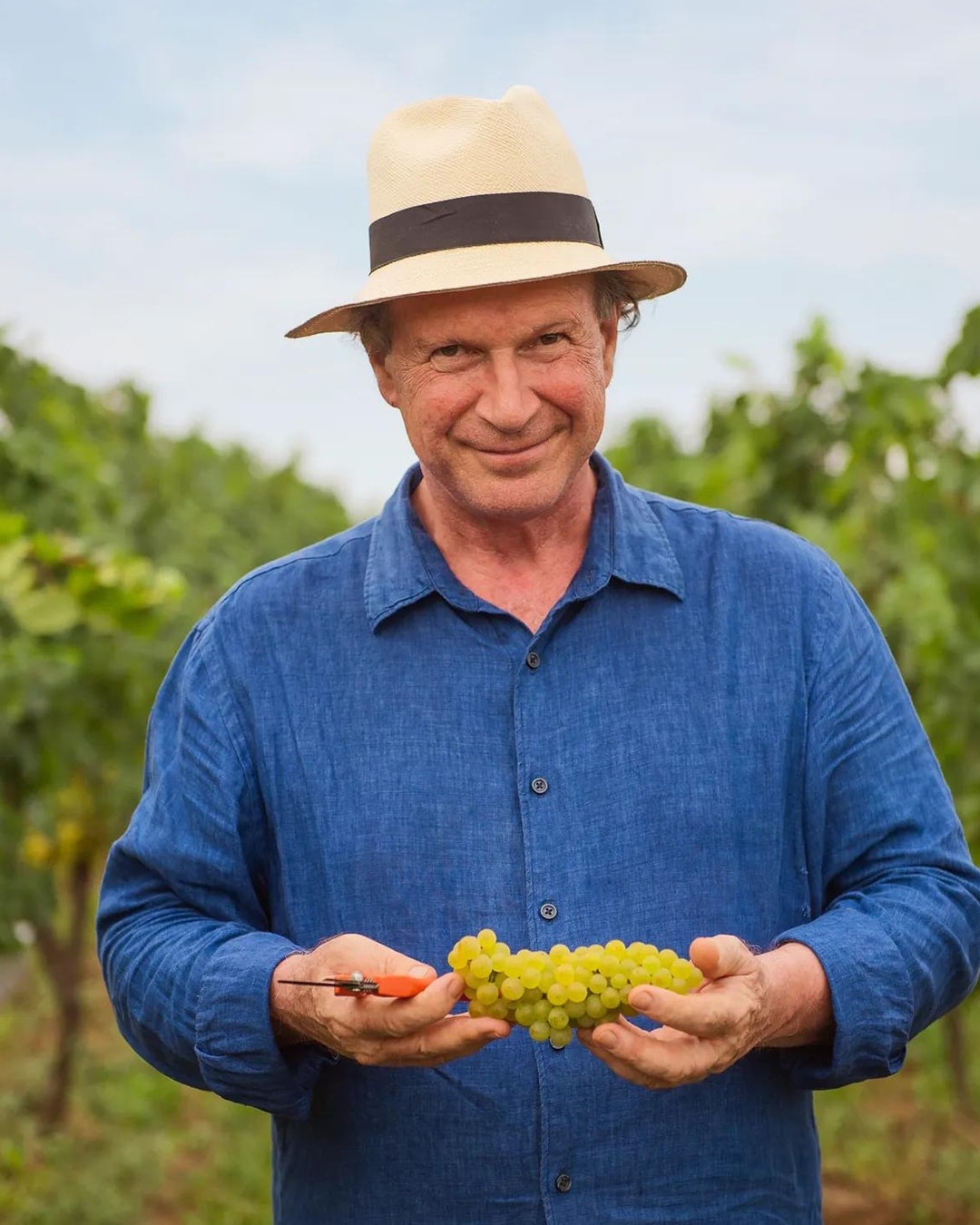
PHILIPPE MÉVEL
“I’m from France, and I studied agronomy and oenology in Montpellier. I went to Brazil in 1990 for six months to cover the harvest and settle things after the former winemaker had left. Then I signed a contract for three years. That three-year contract is still running… What made me stay in Brazil is the people, their hospitality, their kindness. It’s easy to make friends. I met my wife here. And of course, after a decade you say, ok, this is my home now.
There are challenges in winemaking here. We’re working with a subtropical climate. It rains one day in three, which means the air is very humid. For that reason it’s not possible for us yet to be completely chemical-free. But we use the very minimum possible, very carefully according to best practices, and we have been certified in responsible farming locally.
We’ve achieved so much by changing vineyard practices, vine training and canopy management.
We have a local treasure of a grape here, Riesling Itálico, a variety we grow alongside the classic varieties of Chardonnay and Pinot Noir. It adds great freshness and delicacy to our blends. The Chardonnay gives a richer mouthfeel, typically some green apple and pineapple aromas, and the Pinot Noir gives a little structure and some red-fruit character to the composition. We use some reserve wine too to round things out and get things singing in harmony – it’s an important part of our winemaking philosophy here, because there is considerable vintage variation. We use the slow-ferment long Charmat method, with continuous lees stirring during the ferment for creaminess, typically over four months but it can be up to a year depending on the wine. This method is the best one for this place.
Each vintage is so different. Every year, everything is new. Suddenly what you knew isn’t useful any more; you have to do something different. So in a sense, each vintage is a new adventure."
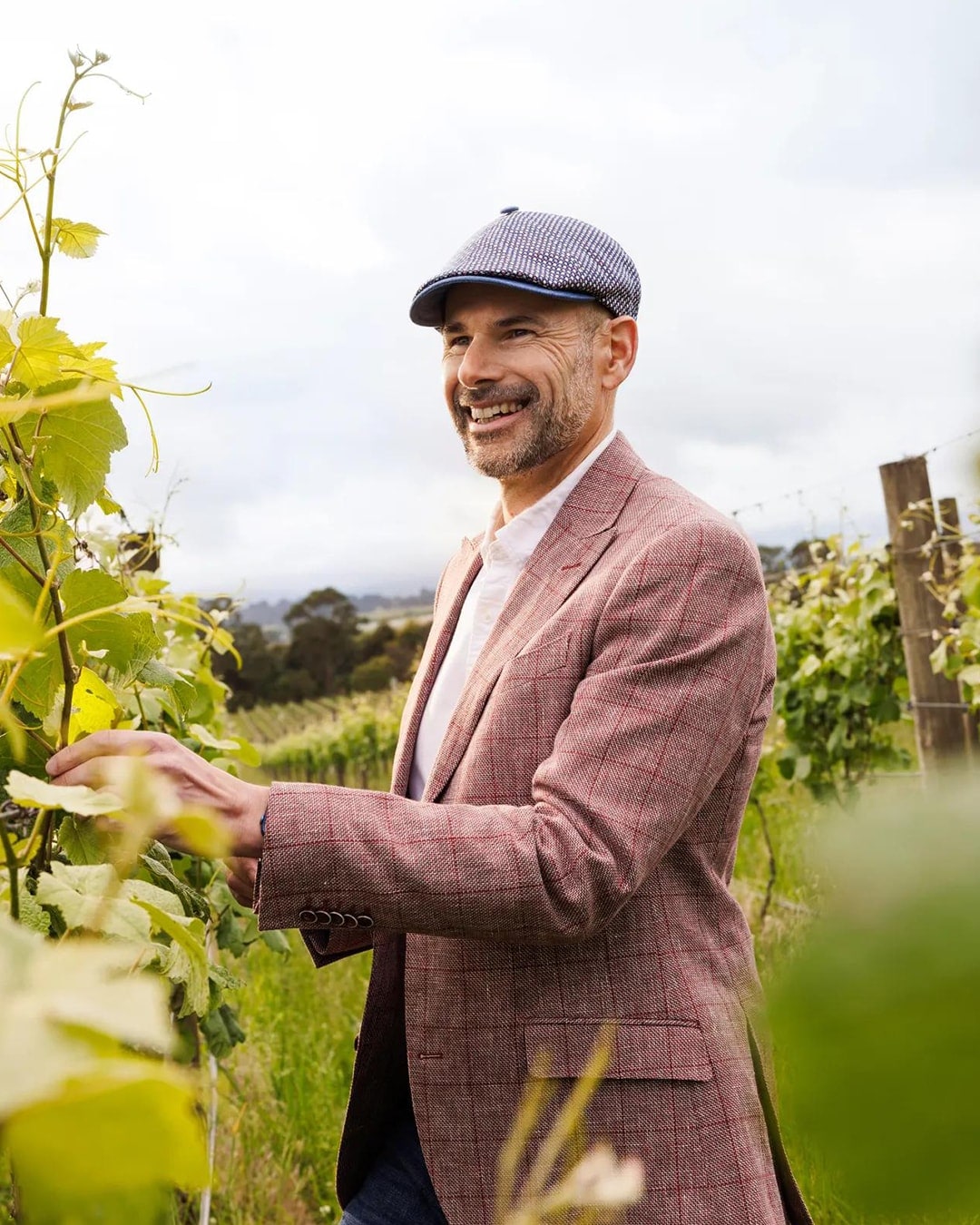
LOÏC LE CALVEZ
"I grew up in France; but in Brittany, which is not a winemaking region. My dad started a little bottle shop when I was about 10, I began helping out, and by the time I was 14 I knew my life was going to be in wine. I did two years of general chemistry and biochemistry to be able to apply to the University of Oenology in Bordeaux; then a three-year course.
After my first harvest in Bordeaux in 1997 I met someone who had connections in Australia. That’s the beauty of winemaking: you can travel the world, do northern hemisphere, then southern hemisphere. The company I went to work for had a small winery in Tasmania making sparkling. I found I loved sparkling wine, loved the complexity. After a stint in California I returned to Australia as an assistant winemaker. I’ve been living here since 2002.
The CHANDON Yarra Valley vineyard is magnificent. But when I joined CHANDON in 2023, the thing that excited me most was the fact that I was going to work with the unicorn sparkling-wine vineyard in Australia. The renowned Whitlands vineyard is about 800m in altitude, quite high, and it’s one of those vineyards where you harvest the grapes and then… let it happen. Magically, the wine is fantastic. But we can’t be relying on just one, so we also have Yarra, and Strathbogie, not too far away, at 550m altitude – and which this year for example gave us the best grapes.
Do we have a style? If you take CHANDON Brut as a benchmark: it has to be delicious. Simple as that. Flavorful, delicious, recognizable. We’re not ashamed, or scared, of flavor here. That’s what differentiates us from champagne. We’re in Australia, there is sun – so I want the sun to shine in the bottle. And I want to make sure that when people drink CHANDON they don’t say oh, what’s that delicate little flower? No: it has to have citrus, it has to have character. That’s what I strive for – and also that’s what consumers want more and more now, especially young consumers. Beyond that, we’re always prepared to innovate; that’s what CHANDON is about.”
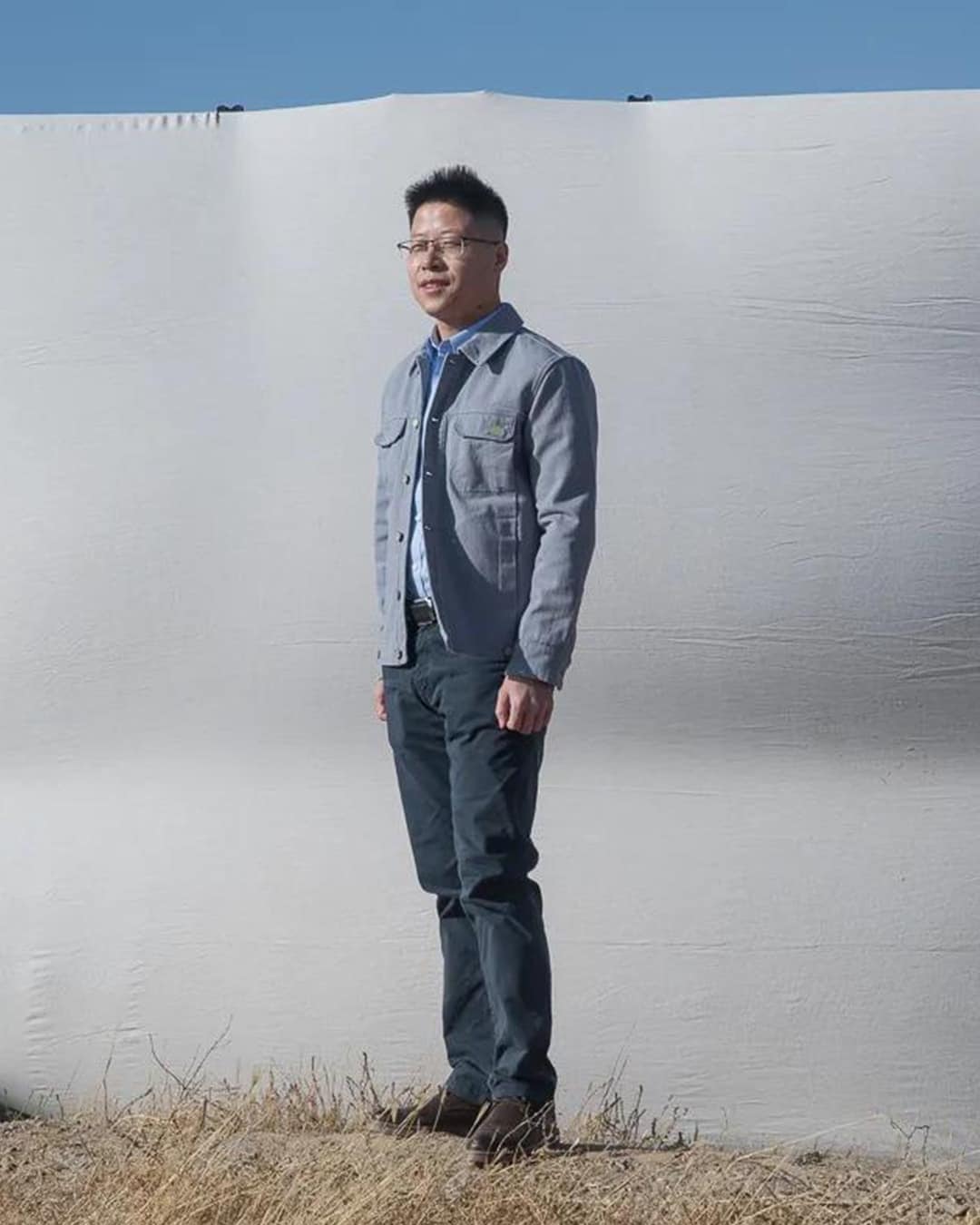
AIGUO LIU
“Both Su Long, the Estate Director, and I are masters graduates of the Northwest Agriculture and Forestry University, the top university in China for viticulture and oenology. I joined CHANDON in 2012 with extensive prior experience as a winemaker, a passion for sparkling wine and a knowledge of what the best Chinese sparkling wine should be, what the Chinese market wanted.
That was the year of our first harvest. It wasn’t the best vintage – it was quite a tricky year because it was unusually wet – but it was still good. We released that wine in 2014 to great interest. Since, the wines have got better and better.
The way wine is drunk in China is a little different from the way it’s drunk in Europe. It’s very much about sharing with friends, or business transactions, as a sign of trust. We call it ‘bottoms up’. It’s not such an everyday drink, part of the culture. Because of the context, it’s important that the wines are approachable and easy to drink. The mouthfeel is vital: it needs to be soft. You have to bear in mind the food, too, much of which is quite spicy.
We’ve had a lot of good times, even in the few years since we were founded. The launch of CHANDON Xi in 2019 was a highlight because it was so well received – it’s really in tune with Chinese taste. At the dinners, everyone wanted more! But we’ve had bad times, too. Spring 2018 comes to mind – we had a very severe late frost when there were already shoots on the vines. It wiped out 80 per cent of our crop. That was tough. We relied heavily on our reserves. But this is what happens when you make a natural product. We drew on our collective ingenuity to get through. And you get the highs, too, such as the real excitement and satisfaction you feel when you’re blending, once you finally find a point of unity, balance, fusion and integrity after lots of trials. I want CHANDON to be the top sparkling wine in China in terms of quality, reception and innovation. This should be our ambition, and I am sure we will achieve it.”