

Every CHANDON winery is a window onto our story and our craft. Visit any one, and you'll find shared standards of craftsmanship that are unmistakably CHANDON, side by side with a unique local flavor borne of a specific terroir, a specific culture, and a specific head winemaker's vision.
You'll also find a sincere welcome. The world of wine can be intimidating, but at the style of hosting at every CHANDON winery typifies our ethos of inclusivity, generosity and warmth, with an emphasis on shared appreciation: communal experiences that inform, inspire and involve. At each one, we welcome novices and connoisseurs, new and returning customers, Club CHANDON members and speculative visitors just the same: with open arms and a raised glass.
Our sparkling wine estates in Argentina, California, Brazil, Australia and China celebrate the natural beauty of their surrounding areas and immerse guests in our wealth of CHANDON history. Our staff illuminate our craft, helping visitors understand how we make our exceptional sparkling wines, embodying our pioneering founder’s spirit every day by pushing the boundaries of our art.


PAULINE LHOTE
Winegrowing and Winemaking Director, CHANDON California
CHANDON BREAKS GROUND
MENDOZA, ARGENTINA (1959)
In 1959, Robert-Jean de Vogüé and Renaud Poirier's epic search for the best terroirs in South America in their heroic 2CV brought them to Agrelo near Luján de Cuyo, around 3,280 ft in altitude. Summers were hot in this part of Mendoza, and winter nights were cold. There was good water deep underground, but the surface was arid.
Who would be so audacious as to start making sparkling wine here in 1959? CHANDON, of course. Poirier and, later, his protégé Philippe Coulon, worked their magic on the grapes. Things were hard at first. The nearest phone was over 6 miles away; to make an international call meant a 25 mile journey to Mendoza. HQ was one room that served as office, kitchen and lab. Staff lived in unheated barracks, much of their equipment was rented, and the local bottles weren’t strong enough and kept breaking. But with Poirier and Coulon at the helm, the drive to create quality won through.
As the pioneers had predicted, the vines’ roots went deep into the dry soil in search of the clear Andean meltwater. International varieties – Chardonnay and Pinot Noir – were planted, supported by local hero Malbec, with Petit Manseng, Semillon and Ugni Blanc. The vines thrived. The altitude of the vineyards preserved the grapes’ freshness and fruit character and tempered alcohol levels. High, expressive mountain terroirs would become a CHANDON signature.
More innovation was to come, with the introduction of state-of-the-art stainless-steel tanks and temperature-controlled fermentation in the 1990s and water-saving precision drip irrigation in the vineyards in the 2000s.

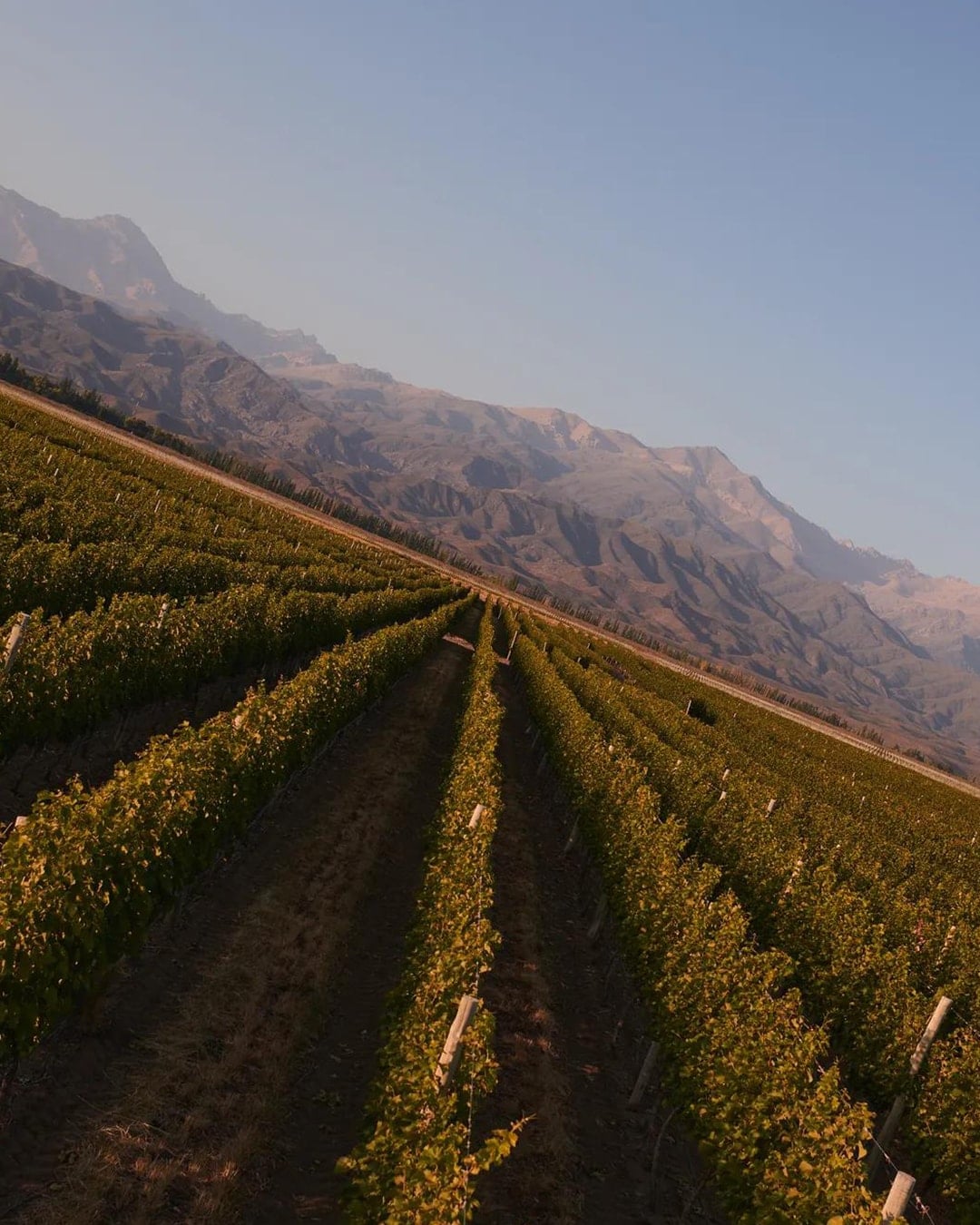
The original vineyards, purchased in the 1950s, are at Agrelo, 18 miles south of Mendoza, at an altitude of around 3,280ft. At the time, this was very high.
Soils are mostly sandy, with a deeper layer of gravelly Andean stones, giving exceptional drainage, which is important for vines. Using careful drip irrigation during summer, our viticulturists control yield and vigor carefully, resulting in small berries with excellent concentration of flavor.
CAICAYEN AND CEPAS DEL PLATASince the early days, we have gone up and up. In 1990, we planted at Gualtallary, Tupungato, in the Uco Valley, at an altitude of 4,100 ft, and in 2005, we went further, to El Peral, also in Tupungato, at 5,085ft. Sited at the foot of Mt Tupungato – one of the highest peaks in Argentina – these Caicayén and Cepas del Plata vineyards benefit from intense sunlight exposure plus cold nights. This daily temperature range is key to our quality – as are the stony, free-draining alluvial soils. The lack of water stresses the vines, reducing vigor and yields and causing them to grow those small, concentrated berries.
EL ESPINILLOFinally, in 2015 we made further plantings in El Espinillo, again in Gualtallary, at a height of 5,330ft. This is approaching the extreme limit of viticulture in Mendoza. Here, poor stony and alluvial soils with layers of sand and limestone yield very concentrated, mineral wines.
We grow primarily Chardonnay and Pinot Noir: the perfect varieties to produce sparkling wine in this region. With around 1,976 and 988 acres respectively, these are by far our biggest plantings, but we also have a little Semillon and Petit Manseng, and some Malbec, which we use in our rosé cuvées.
Our environment gives us very pure, true expressions of Chardonnay and Pinot Noir, with bright primary-fruit notes and high acidity, giving a nice refreshing palate. Because we make a range of styles, we use both the slow-ferment long Charmat method and the traditional method, giving us the ability to target different tastes.


PIONEERS OF AMERICAN SPARKLING WINE
NAPA VALLEY, CALIFORNIA (1973)
The CHANDON Napa Valley winery is located in the wine heartland of the USA, synonymous with quality. Forever alert to new terroirs and new challenges, CHANDON gravitated here in 1973.
One day back in 1968, Robert-Jean de Vogüé, impressed by the Californian wines he had sampled at a conference, had an idea: CHANDON would again lead the way, as the first champagne-house-led sparkling outpost in the USA. He recruited John Wright, an enterprising and passionate oenophile who had recently authored an in-depth study on Californian wines for a prominent consultancy, to run what would be known as Domaine CHANDON.
Wright handpicked the ideal sites for growing top-tier sparkling-wine grapes. The locations, in Los Carneros, Mt Veeder and Yountville, covered a range of altitudes, aspects and microclimates.
Planting began immediately; 1976 saw the first harvest, under the estate’s first winemaker Dawnine Dyer and veteran oenologist Edmond Maudière.
Today, CHANDON produces sparkling wines that have won multiple awards and are US market leaders.
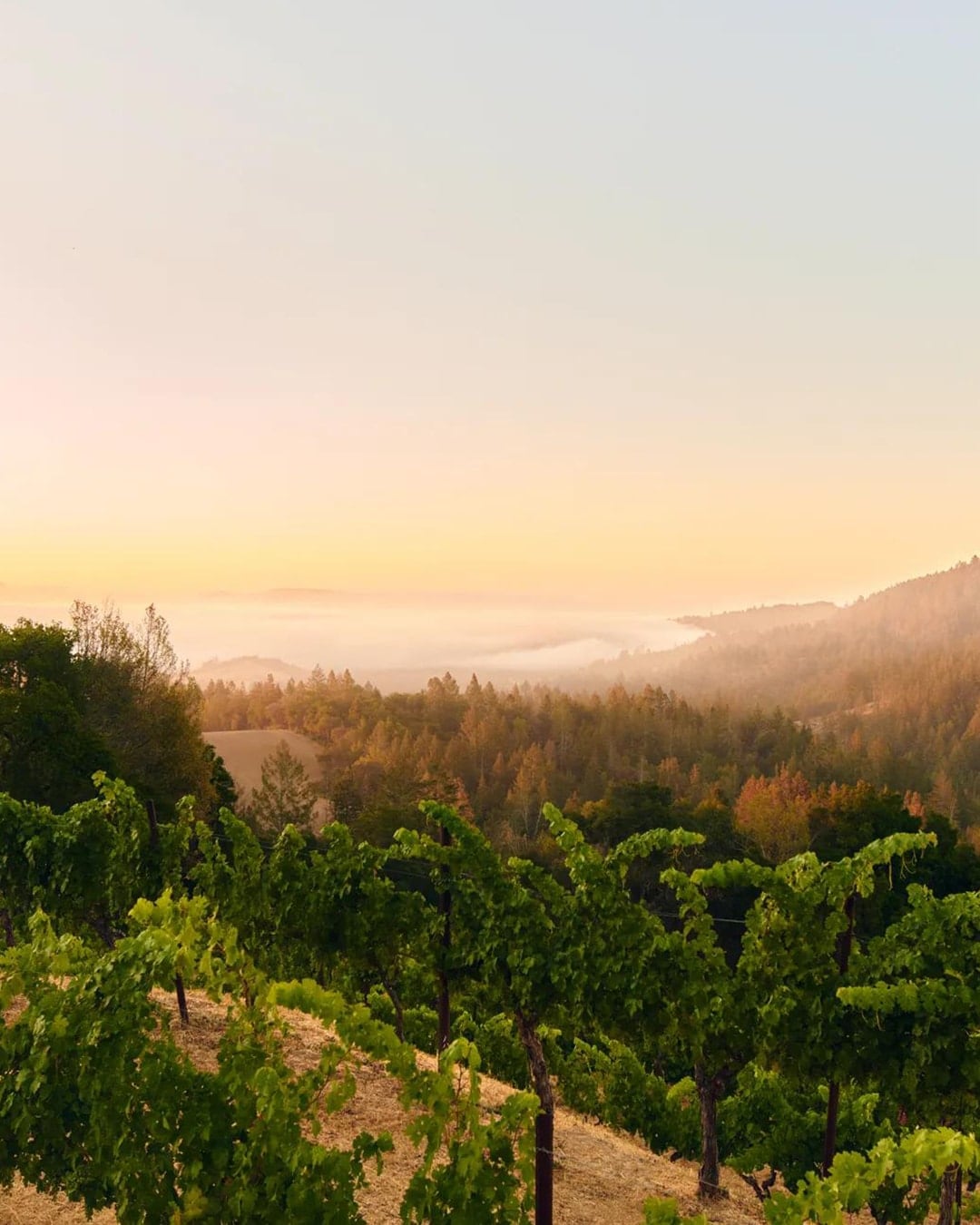
Our largest vineyard is in Los Carneros. This region, bordering San Pablo Bay, has a climate of summer fogs and constant cooling winds. It's our coldest site and arguably the finest region for California Pinot Noir. Until the early 1970s, the hills of Los Carneros were used mainly for grazing and the land was considered by most people to be unsuitable for vineyards. Now, Los Carneros Pinot Noir has an international reputation for its distinctiveness and intensity of flavor. Chardonnay shines here too, gaining great concentration. Los Carneros is also one of the finest areas for growing Meunier, a small but vital player in CHANDON Napa sparkling wines.
MOUNT VEEDERNext is our highest site, at Mount Veeder, in the Mayacamas Range in southern Napa Valley. The same breezes that cool Los Carneros find their way to this area. The higher altitude, around 1,640ft, results in temperatures up to 10 - 15˚F cooler than on the valley floor even on hot summer days; you are often above the fog. As at Los Carneros, the cool climate slows grape ripening, maintaining acidity and allowing for flavor development. Fast-drying soils result in small, concentrated berries. Our Mount Veeder Chardonnay is known for its spicy aromas.
YOUNTVILLELast in our Napa vineyard sites is Yountville, between Napa and Oakville on the valley floor. It’s our most northerly site, but it has the warmest climate, because it’s furthest from the San Pablo Bay fogs. Our select Pinot Noir and Chardonnay vineyards, located on what’s known as the Yountville Bench, contribute richer, riper fruit, which is important in our blends and our reserve wines. Vines develop deep roots in this well drained and slightly sandy soil, reducing their yield and increasing quality. Yountville is also where you'll find our CHANDON winery.
The classic sparkling wine varieties of Pinot Noir, Chardonnay and Meunier are our holy trinity of grape varieties at CHANDON California, working perfectly with our climate and terroir.
BRAZILIAN AUDACITY
SERRA GAÚCHA, BRAZIL (1973)
CHANDON Brazil, like CHANDON California, was founded in 1973.
After the success of CHANDON Argentina, our pioneers were certain that there were further potential sites to craft the best sparkling wine in South America. It was the Serra Gaúcha, in the state of Rio Grande do Sul, a region with 100 years of winemaking tradition and a warm subtropical climate, that looked most promising. In winter, temperatures rarely drop below 41˚F. In summer, they can reach 77˚F. Even within the chosen site, there is a range of microclimates.
To a winemaker, they’re like colors in a paintbox.
Frédéric Chandon de Briailles, at that time President of Moët Hennessy, and Philippe Coulon took charge. They were starting from zero – but with key insights gleaned from Mendoza. They planted three key varieties: Pinot Noir, Chardonnay, and Riesling Itálico – a flagship grape for the region, well adapted to the climate. It’s not possible to be completely chemical-free in this climate, but CHANDON Brazil has favored natural and preventative methods of pest and disease control that prioritize the human hand.
The first cuvée was released in 1977. That wine is still being made today, under the name CHANDON Réserve Brut. A demi-sec was introduced in 1978, and under Philippe Mével, at the helm since 1990, many other styles have followed, including the innovative CHANDON Passion, a luscious rosé with a little carnaval in its heart. It was first released in 1998 for the 25th anniversary of CHANDON Brazil.
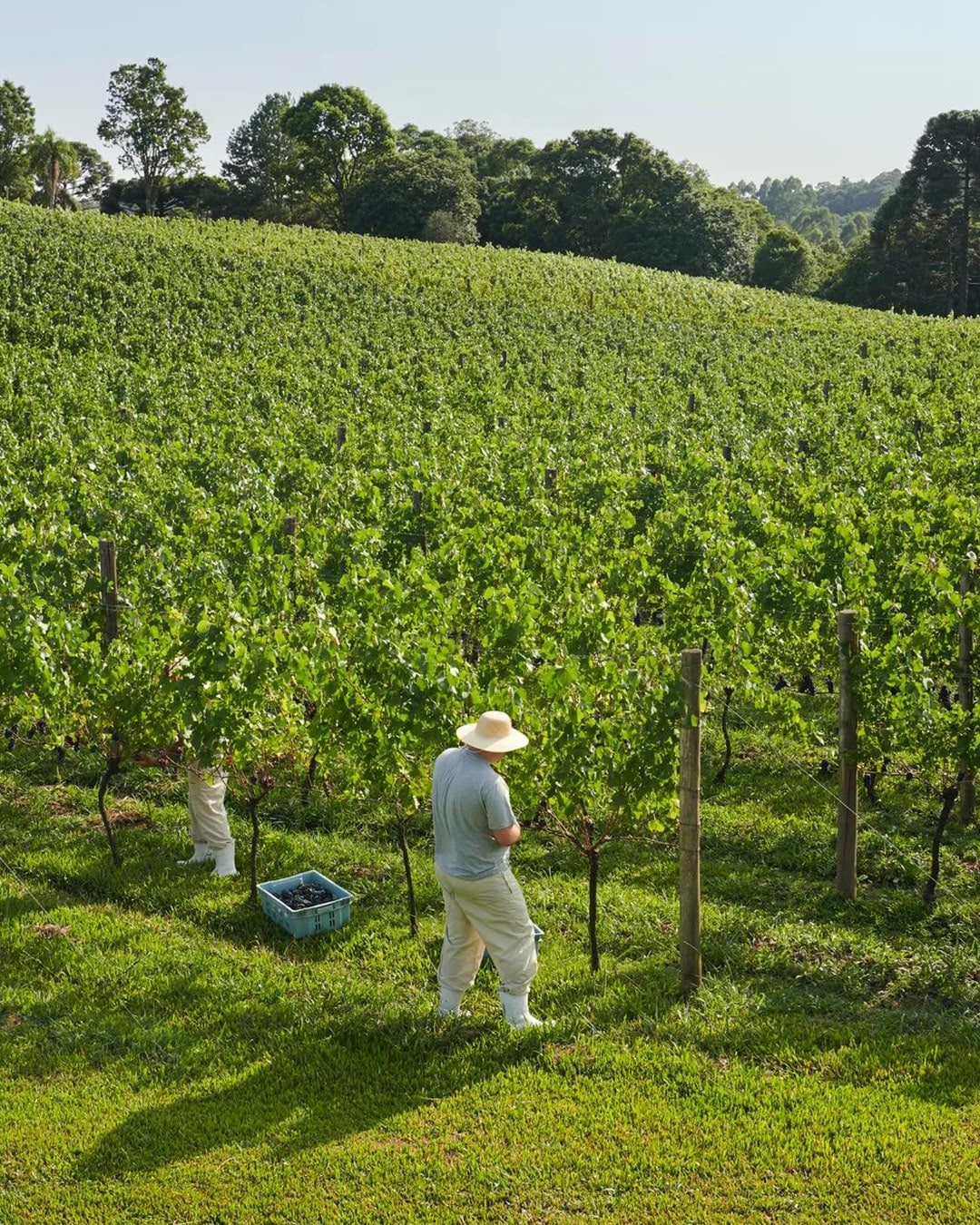
Our primary vineyard, and our CHANDON Brazil winery, is in Garibaldi in the Serra Gaúcha, Rio Grande do Sul, about 74 miles from Porto Alegre. The area is a renowned wine region with a warm climate ideal for the production of quality sparkling wine. We have around 173 acres here and the altitude of these CHANDON vineyards is around 2,132ft. At times the terrain recalls Tuscany, but with palm trees, waterfalls, and parrots. It’s also far more humid. It has stony soil with a basaltic substrate, and more clay in the valleys.
ENCRUZILHADA DO SULWe have a more recent CHANDON vineyard of around 617 acres, in the cooler, drier Encruzilhada do Sul, planted in 2000. The soils, on a granitic substrate, are a mix of sand, clay and lime. At around 1312ft in altitude, the vineyards are lower than at Garibaldi, but they are around 155 miles further south, so their climate is cooler.
In both sites we have a diurnal temperature range of at least 50˚F, with the Encruzilhada do Sul vineyard reaching 53 to 55˚F thermal amplitude during maturation and harvest. Irrigation is not needed at either site.
Our principal varieties are Chardonnay, Pinot Noir and Riesling Itálico, a historic variety for this region, well adapted to our conditions. It has good citrussy freshness. For our Passion wine, we use Malvasia di Candia and Moscato Canelli, along with a small proportion of Pinot Noir.
AN EARTHLY PARADISE
YARRA VALLEY, AUSTRALIA (1986)
By the 1980s, CHANDON was a strong presence in the Americas. It was time to look further afield. John Wright, instrumental in CHANDON California, first visited Victoria in 1982 and was impressed with the Australian can-do attitude. He was followed by Phillipe Coulon, who gave his seal of approval in 1984. When they were introduced to oenologist Tony Jordan, they knew he was the right man to make the wines they had in mind. In 1985, they hired him.
If you’re looking for land suitable for a top sparkling wine estate in Australia, you’re a little spoilt for choice. But Tony Jordan wanted a cool-climate area with enough diversity of terroir and climate to give him maximum blending options. When he arrived at Green Point, a tumbledown estate in Coldstream, Yarra Valley, he knew he’d struck gold. He began by planting Chardonnay, Pinot Noir and Meunier.
Green Point was only an hour’s drive from Melbourne, meaning the site had the potential to become an Australian winery destination. Work was started on an additional building, completed in 1989 – also the year the first CHANDON Australia wines were released. Now, the original traditional 1880s homestead is linked to the winery via a colonnade.
Sales grew steadily along with the reputation of Australian wine. It became a virtuous circle. Now, the CHANDON Australia winery welcomes a staggering 100,000 visitors annually.
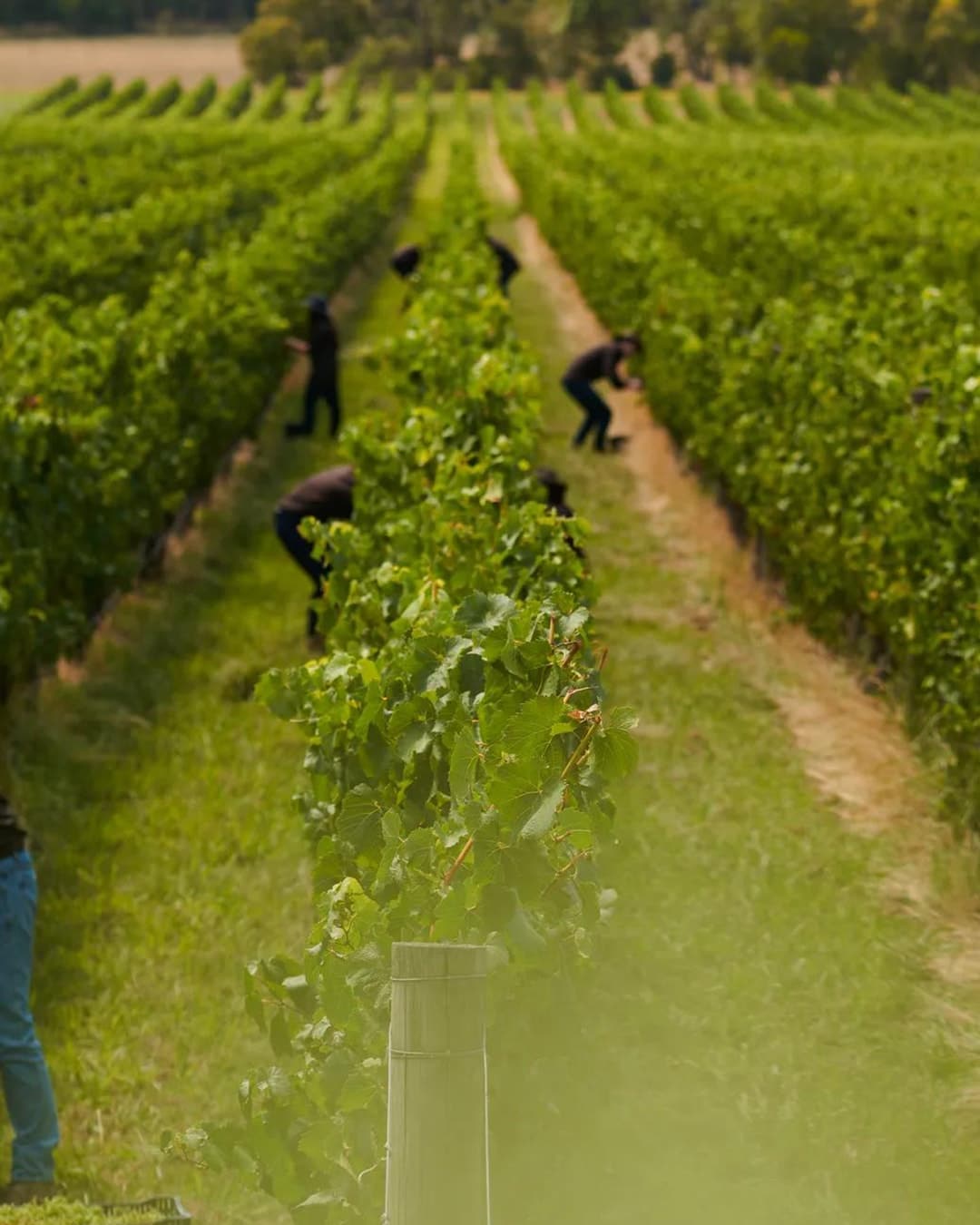
Green Point is our home vineyard in the Yarra Valley, at about 100m above sea level. The location of our CHANDON Australia winery, it’s a spectacularly beautiful site in anyone’s book. This vineyard grows fine and elegant Chardonnay, Pinot Noir and Meunier. The cold weather patterns that sweep in from the Great Southern Ocean, coupled with rich clay loam soils, help to ensure the ongoing health of the vineyard.
STRATHBOGIE RANGESNext is a much higher site further north in the Strathbogie Ranges, at almost 3,296ft in elevation. This remote location is the remnant of a granite peninsula that was pushed out to the ocean and eroded over millions of years. The site spans more than 444 acres and has mineral-dense granitic and clay loam soils. This cool vineyard ripens slowly and late in the season; it sees very cold nights during ripening, resulting in fine acidity in the grapes.
WHITLANDS HIGH PLATEAUOur third vineyard site is in the Whitlands High Plateau, around three hours’ drive from the CHANDON Australia winery and higher still, at 2,788ft altitude. One of the highest and coolest growing sites in Australia, this renowned vineyard delivers intense flavor and bright natural acidity. We consider it to be mainland Australia's finest sparkling wine region and it reliably grows multi-award-winning wines.
Our principal grape varieties are Chardonnay, Pinot Noir, Meunier and Shiraz. All our wines are presently made using the traditional method, which takes a minimum of 12 months from harvest. Individual varieties and parcels are vinified separately, giving the CHANDON winemakers up to 100 base wines to choose from when assembling our blends.
AN ASIAN ADVENTURE
NINGXIA, CHINA (2013)
In the north of China lies the Ningxia Hui autonomous region, in the eastern foothills of Helan Mountain. On the edge of a pristine mountain wilderness, this is one of the country’s largest viticultural areas, now recognized internationally for the caliber of its wine. It was pinpointed by Tony Jordan in 2009, and has been the setting for our CHANDON China winery since 2013.
What thrilled Jordan about this site wasn’t just the view: he believed that its exceptional climatic, environmental and geological conditions made this the right place to produce top quality Chinese sparkling wine. We produced a trial vintage in 2012 and opened fully in 2013. The winery is a showcase, housing some of the most advanced production facilities in the world, with pneumatic pressing, controlled-temperature fermentation, and an automatic bottling and disgorging system. All our grapes are carefully handpicked by local villagers, and we are the only traditional-method winery in this area.
Ours was the first sparkling wine produced in China according to international standards, and CHANDON China wines subtly blend traditional savoir-faire with Chinese modernity. For our red sparkling wine, CHANDON Xi, we spent several years carefully studying the Chinese palate.
It is important to us that our wine delights both international and local tastes.
This region has a dry continental climate, with less than 7 inches of rainfall per year, hot summers, and cold winters.
So cold, in fact, that during midwinter, when temperatures can drop to -4°F, we cover the vines with earth to protect them. Summers are hot, requiring further careful management; vines are planted east-west to maximize shade and preserve all-important acidity. The vineyards are sited on mineral-rich, well-drained gravel and loam soils with some clay.
Our grape varieties at CHANDON China are Pinot Noir and Chardonnay, the perfect classic duo for our international-style traditional-method sparkling wines. We use a little Syrah and Marselan in our CHANDON Xi red sparkling wine.
CHANDON WINERIES
WE ARE HOSTS AT HEART
EXPERIENCE THE CHANDON WELCOMEA visit to a CHANDON winery is an experience from arrival. It’s a journey for the mind and senses, showcasing our vision of contemporary luxury.
We are hosts at heart. Our hospitality is relaxed, spontaneous and inclusive. Our CHANDON wineries are places where we gather, we entertain, we share and we connect with each other and with nature. They are also the gateways to our craft. There is so much to discover about our diverse CHANDON vineyards and culture, our winemaking methods and, of course, the exceptional sparkling wines that are the result. Our tailored experiences, from a sparkling wine tasting or tour to an elegant feast with paired wines, are immersive, captivating and delicious.
The human factor is at the heart of our story – so we welcome novices and connoisseurs, new and returning customers, Club CHANDON members and speculative visitors just the same: with open arms and a raised glass.
Our CHANDON history is about pioneering spirit, discovery and community. When we welcome you into our homes to discover CHANDON wines, you become part of that story.